Table of Contents
Table of Contents
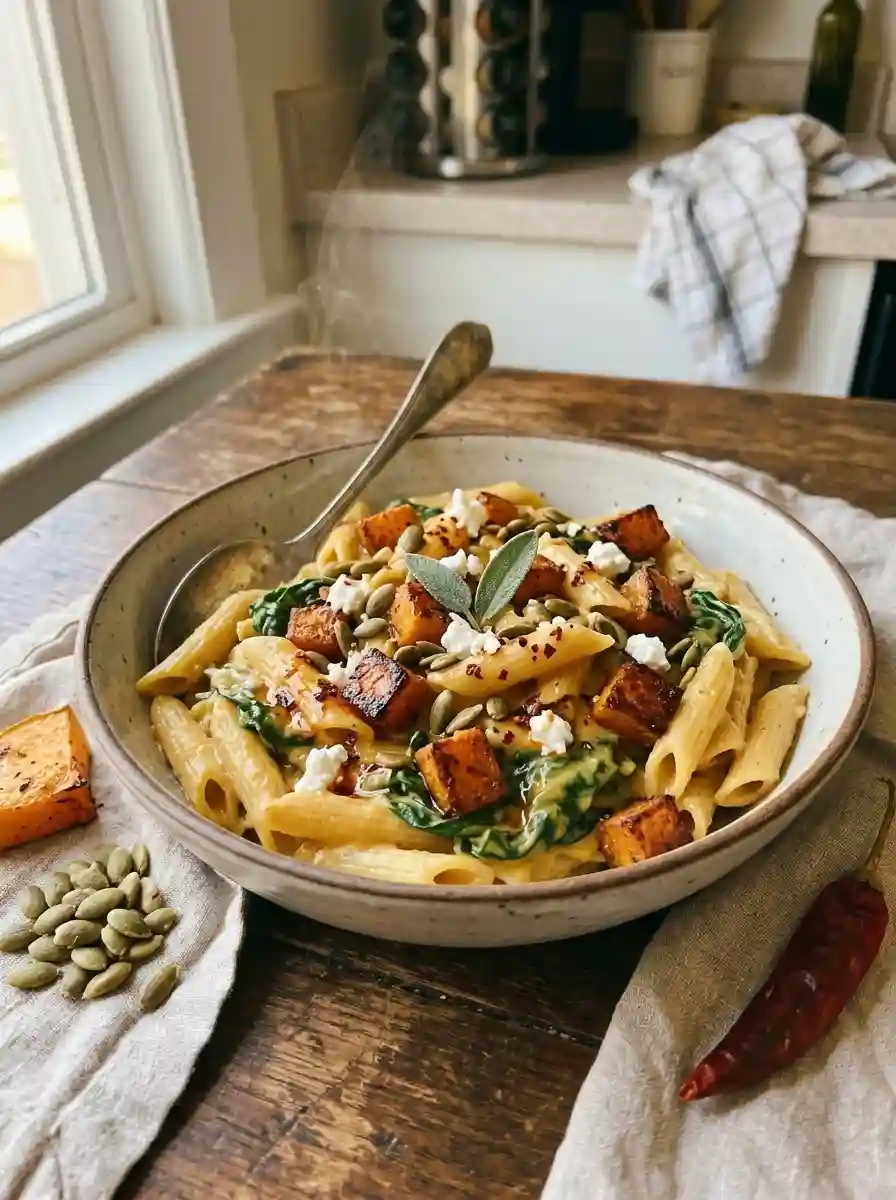
When the temperatures drop, there’s nothing better than a warm, hearty pasta dish to keep you cozy. This Spicy Butternut Squash Pasta With Spinach is the ultimate fall comfort food: a silky, vibrant sauce made from roasted butternut squash, a gentle kick of heat, and fresh spinach that adds color and nutrition. It’s creamy without heavy cream (unless you want it!), naturally vegetarian, and endlessly customizable.
Note: Total active time is just 20 minutes. Let your oven and stovetop do the rest!
Dietary Badges
- Vegetarian (Naturally!)
- Vegan Option (Use coconut milk + vegan cheese)
- Gluten-Free Option (Use GF pasta)
- Fall Favorite (Seasonal & Satisfying)
- Meal-Prep Friendly (Reheats beautifully)
The 3 Biggest Mistakes People Make with Butternut Squash Pasta
Even simple pasta dishes can turn into a bland, watery, or mushy disappointment if you fall into these common traps. Avoid these to guarantee a vibrant, creamy, flavorful pasta every time:
- Overcooking the Pasta (The Mush Trap): If you cook your pasta to “al dente” in the boiling water, it will become overcooked and soft when finished in the sauce. The Fix: Undercook the pasta by 2-3 minutes (it should still have a slight firm bite). It will finish cooking perfectly in the warm sauce.
- Adding Spinach Too Early (The Color Killer): Spinach wilts in seconds. Adding it at the beginning of sauce-making turns it gray, slimy, and bitter. The Fix: Stir in fresh spinach at the very end, just until wilted. This preserves its vibrant green color, slight texture, and fresh flavor.
- Not Seasoning in Layers (The Bland Sauce): Butternut squash is naturally sweet. If you only salt at the end, the dish can taste one-dimensional. The Fix: Season the squash while roasting, season the aromatics (onion/garlic) while sautéing, and do a final taste adjustment at the end. This builds complex, balanced flavor.
Why This Works: The Science of the Perfect Squash Pasta Sauce
- Roasting = Caramelization: Roasting butternut squash at high heat (400°F / 200°C) caramelizes its natural sugars, creating a deeper, richer, slightly nutty flavor that boiling or sautéing alone cannot achieve. This is the flavor foundation of the dish.
- Partial Mash = Perfect Texture: Mashing about half of the cooked squash creates a naturally creamy, thick sauce (thanks to released starches), while leaving the other half in chunks provides delightful bursts of sweet, caramelized squash in every bite. It’s the best of both worlds.
- Pasta Water = Magic Emulsifier: The starchy water reserved from cooking pasta is liquid gold. When added to the sauce, it helps create a silky, cohesive emulsion that clings beautifully to every noodle, preventing a greasy or separated sauce.
- Finish with Acid & Heat: A final drizzle of good olive oil and a sprinkle of red pepper flakes (or fresh chili) added after cooking brightens the entire dish. The fat carries flavor, and the heat cuts through the richness, making each bite moreish.
Ingredients
Measurements are provided in both US Customary and Metric for precision. Your exact ingredients are kept intact.
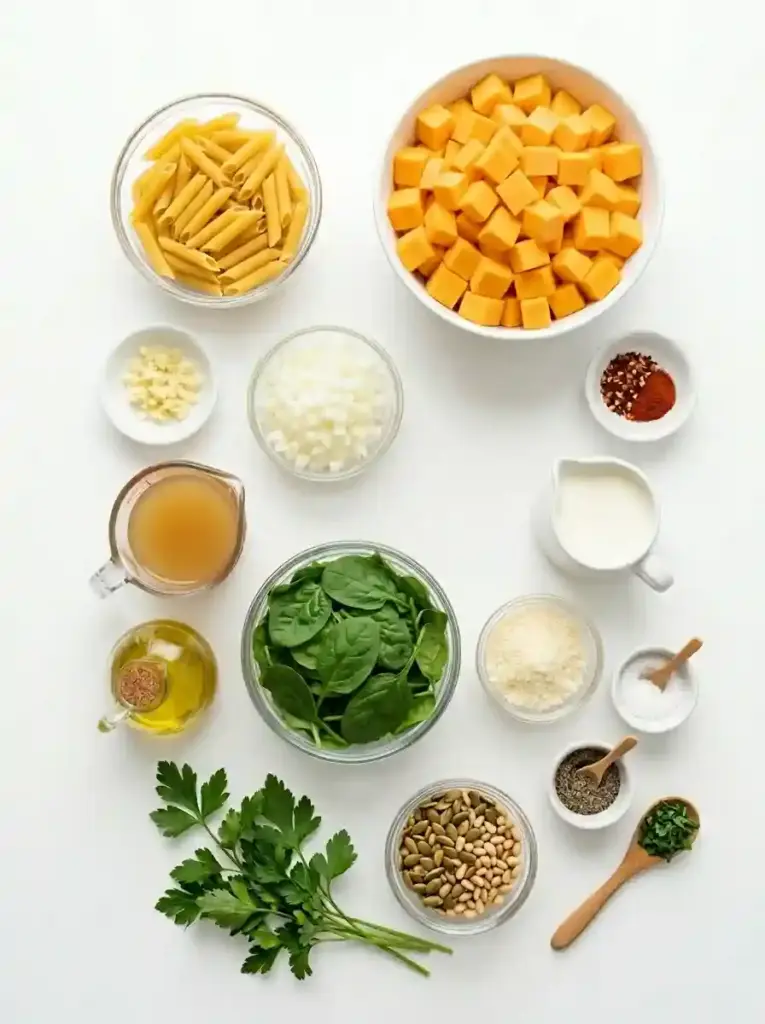
For the Butternut Squash Sauce:
- 3 cups (450g) butternut squash, peeled and cut into ½-inch (1.25cm) cubes
- 2 tablespoons (30ml) olive oil, divided
- 3 garlic cloves, minced
- 1 small onion, diced
- 1 teaspoon red pepper flakes (adjust to taste, or omit for mild)
- ½ teaspoon smoked paprika
- 1 cup (240ml) vegetable broth (or water)
- ½ cup (120ml) heavy cream (or full-fat coconut milk for vegan)
- Salt and freshly ground black pepper, to taste
For the Pasta & Finish:
- 12 oz (340g) pasta of choice (penne, rigatoni, or fusilli work well)
- 3 cups (90g) fresh baby spinach, packed
- Optional Toppings: Grated Parmesan or vegan alternative, toasted pumpkin seeds or pine nuts, fresh basil or parsley
Step-by-Step Instructions (Optimized for Perfect Results)
1. Roast the Squash (For Maximum Flavor)
Preheat your oven to 400°F (200°C). Toss the cubed butternut squash with 1 tablespoon olive oil, a pinch of salt, and pepper. Spread on a parchment-lined baking sheet in a single layer. Roast for 20-25 minutes, tossing halfway, until the squash is fork-tender and caramelized at the edges. Pro-Tip (Quick Method): Short on time? Sauté the squash cubes in a large skillet with 1 tbsp oil over medium-high heat for 8-10 minutes until browned and tender.
2. Cook the Pasta (The “Undercook” Rule)
While the squash roasts, bring a large pot of well-salted water to a boil. Cook the pasta according to package directions, but reduce the cooking time by 2-3 minutes. It should be just shy of al dente (still with a slight firm core). CRITICAL: Before draining, reserve 1 cup (240ml) of the starchy pasta water. Drain the pasta and set aside.
3. Build the Sauce Base
In a large, deep skillet or Dutch oven, heat the remaining 1 tablespoon olive oil over medium heat. Add the diced onion and sauté for 3-4 minutes until softened. Add the minced garlic, red pepper flakes, and smoked paprika. Cook for 1 minute until fragrant. Pour in the vegetable broth and bring to a simmer, scraping up any browned bits from the bottom of the pan.
4. Create the Silky Sauce
Add the roasted butternut squash to the skillet. Using a potato masher or the back of a wooden spoon, mash about half of the squash directly in the pan, leaving the other half in chunks. This creates a creamy base with delightful texture. Stir in the heavy cream (or coconut milk) and season with salt and pepper. Let the sauce simmer gently for 2-3 minutes to thicken slightly.
5. Combine & Finish (The Magic Step)
Add the undercooked pasta and the reserved pasta water to the skillet with the sauce. Stir vigorously over medium heat for 1-2 minutes. The sauce will emulsify, becoming glossy and clinging to every noodle. Now add the fresh spinach, a handful at a time, stirring just until wilted (about 1 minute).
6. Serve Immediately
Taste and adjust seasoning with more salt, pepper, or red pepper flakes if desired. Serve immediately, topped with optional Parmesan, toasted seeds, and fresh herbs. Pro Move: Finish each bowl with a final drizzle of extra virgin olive oil and an extra pinch of red pepper flakes for a bright, restaurant-quality finish.
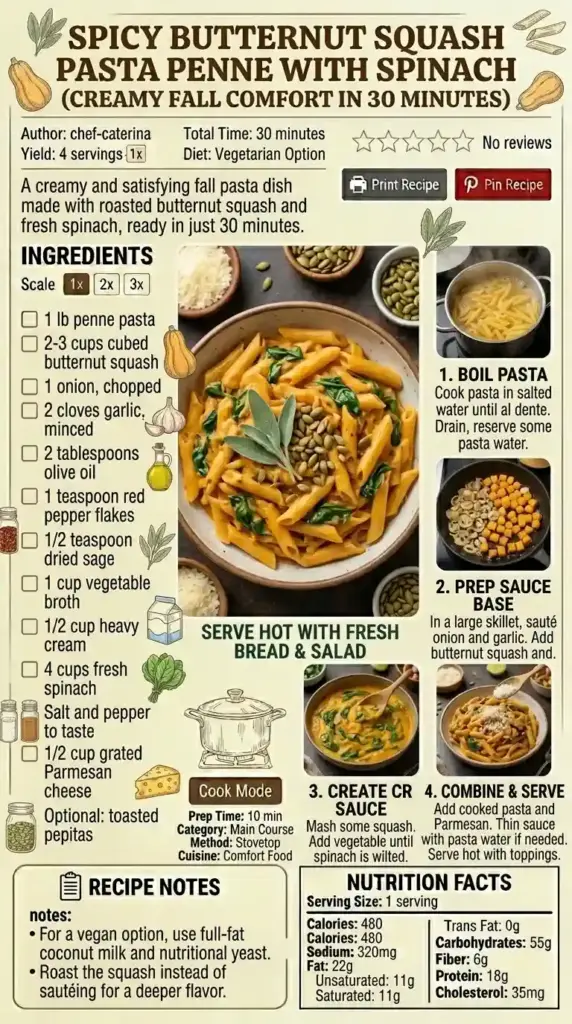
Pasta Shape Guide: Which Works Best?
| Pasta Shape | Why It Works | Best For |
|---|---|---|
| Penne / Rigatoni | Tubes trap the creamy sauce inside | Classic, hearty bites |
| Fusilli / Rotini | Spirals hold sauce in their crevices | Maximum sauce coverage |
| Farfalle / Orecchiette | Shapes cup the sauce and squash chunks | Elegant presentation |
| Spaghetti / Linguine | Long strands coat evenly in silky sauce | Lighter, more integrated dish |
Tip: Any short, sturdy pasta works! Avoid very delicate shapes like angel hair, which can become mushy.
Pro-Tips for Next-Level Squash Pasta
- The “No-Waste” Herb Tip: Use the tender stems of parsley or basil along with the leaves—they have great flavor and reduce food waste.
- Vegan Makeover: Use full-fat coconut milk instead of cream, and top with vegan Parmesan or a sprinkle of nutritional yeast for a cheesy, umami finish.
- Protein Boost: Add a can of drained chickpeas to the sauce when you add the squash, or toss in cooked Italian sausage or shrimp for a heartier meal.
- Spice Control: For a milder dish, remove the seeds from the jalapeño (if using fresh) or reduce red pepper flakes to ¼ teaspoon. For more heat, add a pinch of cayenne with the paprika.
- Make-Ahead Magic: The roasted squash and sauce base can be made up to 3 days ahead. Store separately from pasta. Reheat sauce, cook fresh pasta, and combine for a quick weeknight meal.
- Freezer-Friendly: The sauce (without pasta or spinach) freezes beautifully for up to 2 months. Thaw overnight, reheat, then add freshly cooked pasta and spinach.
Troubleshooting Table
| Problem | Cause & Solution |
|---|---|
| Sauce is too thick / gloppy | Cause: Too much squash mash or not enough liquid. Solution: Thin with reserved pasta water, vegetable broth, or a splash of cream until desired consistency is reached. |
| Sauce is too thin / watery | Cause: Squash wasn’t mashed enough, or too much liquid added. Solution: Simmer sauce uncovered for 3-5 minutes to reduce and thicken. Mash a bit more squash to release starch. |
| Pasta is mushy / overcooked | Cause: Pasta was cooked to al dente before adding to sauce. Solution: Next time, undercook by 2-3 minutes. For this batch, serve immediately—it will continue to soften. |
| Dish tastes bland | Cause: Not enough salt or acid. Solution: Season in layers (squash, aromatics, final taste). Finish with a squeeze of lemon juice or a dash of vinegar to brighten flavors. |
| Spinach turned gray / slimy | Cause: Added too early or overcooked. Solution: Always add fresh spinach at the very end, just until wilted (about 1 minute). |
| Squash is still firm / not sweet | Cause: Under-roasted or cut too large. Solution: Ensure squash cubes are uniform ½-inch size. Roast until easily pierced with a fork and edges are caramelized. |
Storage & Reheating
- Refrigerator: Store leftovers in an airtight container for up to 3 days. The pasta will absorb some sauce; that’s normal.
- Reheating: For best results, reheat gently in a skillet over low heat with a splash of vegetable broth or water to loosen the sauce. Stir frequently. Microwave reheating can make the pasta rubbery; if using, add a tablespoon of water and cover.
- Freezer: Freeze the sauce only (without pasta or spinach) for up to 2 months. Thaw overnight in the fridge. Reheat sauce, cook fresh pasta and spinach, then combine.
- Meal Prep: Cook pasta and sauce separately. Store in containers for up to 3 days. Combine and reheat with a splash of liquid when ready to eat.
Nutrition Information (Per Serving)
Based on 4 servings (using standard ingredients). This is an estimate and may vary based on specific brands and portion sizes.
- Calories: ~400 kcal
- Total Fat: 18g (Saturated Fat: 4g)
- Carbohydrates: 52g
- Sugars: 6g
- Protein: 10g
- Sodium: 300mg
- Dietary Fiber: 5g
- Cholesterol: 20mg
Disclaimer: This recipe is naturally Vegetarian. For a Vegan version, use coconut milk and vegan cheese. For Gluten-Free, use certified GF pasta.
Perfect Risotto alla Milanese in 30 Minutes: A Golden, Creamy Delight
Frequently Asked Questions
Can I use frozen butternut squash instead of fresh?
Yes! Frozen butternut squash works well and saves prep time. Thaw completely and pat dry to remove excess moisture before roasting or sautéing. You may need to reduce cooking time by 3-5 minutes since frozen squash is already partially cooked. The texture will be slightly softer but still delicious.
How can I make this recipe vegan?
Easy! Substitute the heavy cream with full-fat canned coconut milk for the same creamy richness. Skip the Parmesan or use a vegan alternative (store-bought or homemade with nutritional yeast, cashews, and garlic). The rest of the recipe is naturally plant-based. The coconut flavor is subtle and pairs beautifully with the sweet squash and spices.
What’s the best way to cut butternut squash safely?
Safety first! Microwave the whole squash for 2-3 minutes to soften the skin slightly. Cut off the top and bottom to create flat surfaces. Stand it upright and use a sharp chef’s knife to slice off the skin in strips. Halve lengthwise, scoop out seeds with a spoon, then cube. Alternatively, buy pre-cut squash to save time—just check the “use by” date for freshness.
Why is my sauce too thick or too thin?
Too thick: Add reserved pasta water, vegetable broth, or a splash of cream 2 tablespoons at a time until desired consistency. Too thin: Simmer sauce uncovered for 3-5 minutes to reduce, or mash a bit more squash to release natural starches. The sauce should coat the back of a spoon but still flow easily.
Can I prepare this dish in advance?
Yes! For best results: roast the squash and make the sauce base up to 3 days ahead. Store separately from pasta. When ready to serve, cook fresh pasta, reheat sauce with a splash of broth, then combine with spinach. This prevents the pasta from becoming mushy and keeps the spinach vibrant.
How do I adjust the spice level?
For milder: Reduce red pepper flakes to ¼ teaspoon or omit entirely. Remove seeds from fresh jalapeño if using. For more heat: Add ½ teaspoon cayenne pepper with the paprika, or garnish with sliced fresh chili. Remember, you can always add more heat at the end, but you can’t take it away!
What pasta shapes work best for this sauce?
Short, sturdy shapes with nooks work best: penne, rigatoni, fusilli, or farfalle trap the creamy sauce beautifully. Long pasta like spaghetti or linguine also works for a lighter, more integrated dish. Avoid very delicate shapes like angel hair, which can become mushy with the hearty sauce.
Can I add protein to make this a heartier meal?
Absolutely! Great additions include: a can of drained chickpeas (add with the squash), cooked Italian sausage or chicken (stir in at the end), or pan-seared shrimp (add in the last 2 minutes). For plant-based protein, try white beans or lentils. Add about 1-1½ cups of cooked protein for 4 servings.
How do I reheat leftovers without ruining the texture?
For best results: reheat gently in a skillet over low heat with a splash of vegetable broth or water to loosen the sauce. Stir frequently. If using a microwave, add 1 tablespoon water, cover loosely, and heat in 30-second intervals, stirring between. Avoid high heat which can make pasta rubbery or cause the sauce to separate.
Can I use a different winter squash?
Yes! Kabocha, delicata, or honeynut squash work beautifully. Adjust cooking time based on density: kabocha may need 5 extra minutes roasting, while delicata (with edible skin) cooks faster. Sweet potato is also a great substitute with a similar sweet, creamy profile. Cube to the same ½-inch size for even cooking.
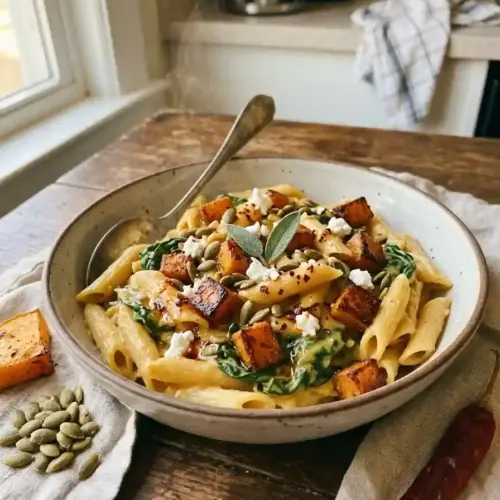
Spicy Butternut Squash Pasta With Spinach
Ingredients
For the Butternut Squash Sauce
- 3 cups butternut squash, peeled and cubed
- 2 tbsp olive oil
- 3 garlic cloves, minced
- 1 small onion, diced
- 1 tsp red pepper flakes (adjust for spice level)
- ½ tsp smoked paprika
- 1 cup vegetable broth (or water)
- ½ cup heavy cream (or coconut milk for a vegan option)
- Salt and pepper to taste
For the Pasta
- 12 oz pasta of your choice (penne, rigatoni, or spaghetti work well)
- 3 cups fresh spinach
- 2 tbsp olive oil
Optional Toppings
- Grated Parmesan cheese (or vegan cheese)
- Toasted pumpkin seeds
- Fresh basil or parsley
Instructions
- Step 1: Prepare the Butternut SquashHeat 2 tablespoons of olive oil in a large skillet over medium heat.Add the cubed butternut squash and sauté for 5 minutes.Stir in the garlic, onion, red pepper flakes, and smoked paprika. Cook for another 5 minutes until fragrant.
- Step 2: Make the SaucePour in the vegetable broth and bring to a simmer. Cover and cook for 10 minutes, or until the squash is fork-tender.Transfer the mixture to a blender and blend until smooth and creamy. Add the heavy cream, salt, and pepper. Adjust seasoning as needed.
- Step 3: Cook the PastaBring a large pot of salted water to a boil. Cook the pasta according to package instructions until al dente. Reserve 1 cup of pasta water before draining.
- Step 4: Combine Pasta and SauceReturn the pasta to the pot. Add the butternut squash sauce and toss to coat. Use the reserved pasta water to thin the sauce, if necessary.Stir in the fresh spinach and cook for 2-3 minutes until wilted.
- Step 5: ServeServe hot, garnished with Parmesan cheese, toasted pumpkin seeds, or fresh herbs if desired.
Notes
- For extra heat, add a pinch of cayenne pepper to the sauce.
- This dish pairs wonderfully with crusty garlic bread or a light side salad.
🥗 Free Custom Keto Meal Plan?
Do you want to lose weight while still enjoying delicious Asian & Thai Fusion meals? Take this quick quiz to get your personalized Keto plan based on your favorite foods!
- ✅ No more guessing what to eat
- ✅ Delicious & easy-to-make recipes
- ✅ Tailored to your body type
Get My Custom Plan Now! →
*Over 100,000+ people have transformed their lives with this quiz.