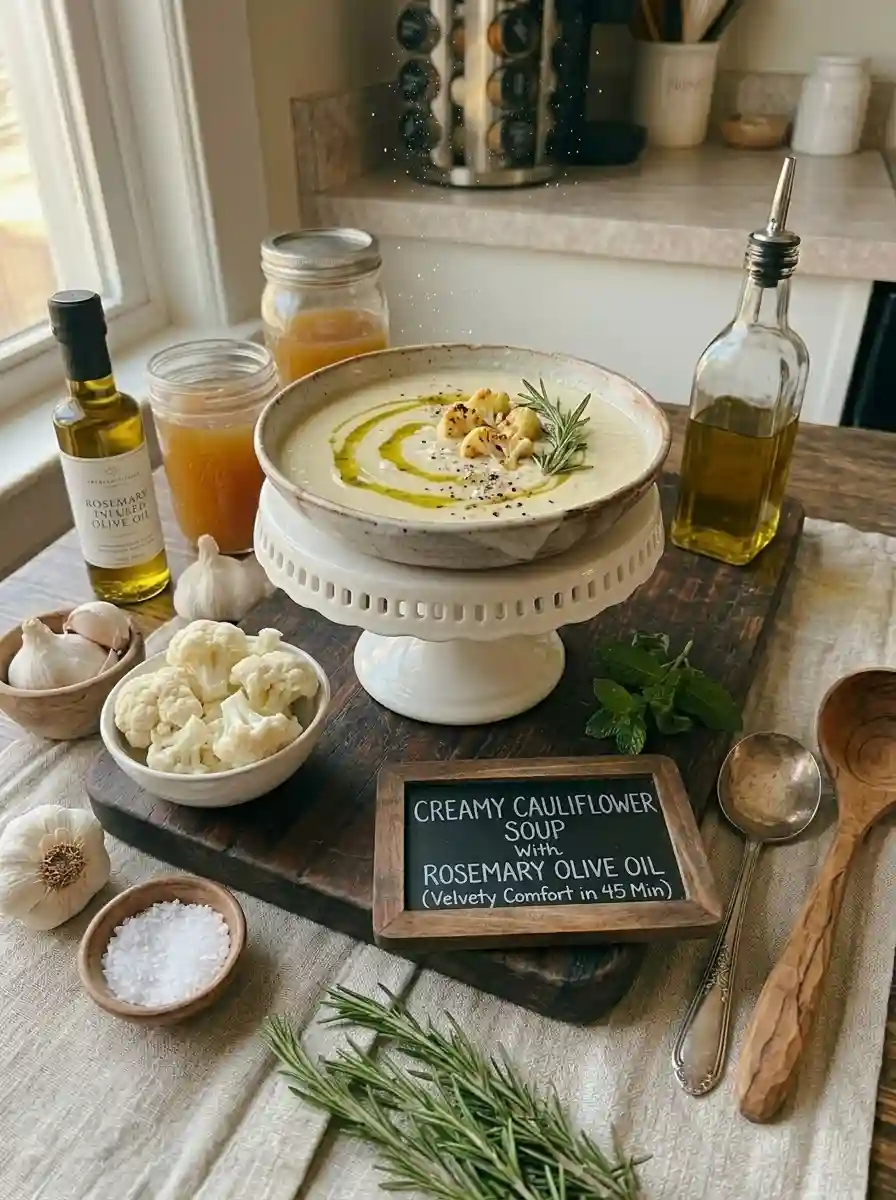
It’s Monday, and you know what that means: soup night. When it’s cold and dreary outside, there’s nothing like a bowl of velvety cauliflower soup to lift your spirits. This Creamy Cauliflower Soup With Rosemary Olive Oil isn’t just comforting—it’s addictive. The secret? A rosemary-infused olive oil so fragrant and flavorful, you’ll want to drizzle it on everything.
Note: Active prep time is just 15 minutes. Let your stove and blender do the rest!
Dietary Badges
- Vegetarian (Naturally!)
- Gluten-Free (Naturally!)
- Vegan Option (Use veggie broth + skip croutons or use GF bread)
- Keto-Low Carb (Under 10g net carbs)
- Make-Ahead Friendly (Flavors improve overnight)
The 3 Biggest Mistakes People Make with Cauliflower Soup
Even simple creamy soups can turn into a bland, watery, or grainy disappointment if you fall into these common traps. Avoid these to guarantee a velvety, flavorful, perfectly balanced soup every time:
- Boiling Instead of Simmering Gently (The Texture Killer): If you boil cauliflower vigorously, it can become waterlogged and lose its natural sweetness. The Fix: Simmer gently over medium-low heat, covered, until just fork-tender. This preserves the cauliflower’s delicate flavor and creamy texture when blended.
- Blending Hot Soup (The Safety & Texture Trap): Blending hot liquid creates dangerous steam pressure that can blow the lid off your blender. Over-blending can also make the soup gluey. The Fix: Let the cooked soup cool for 10-15 minutes before blending. Blend in batches if needed, and pulse until just smooth for a silky texture.
- Adding Rosemary Oil Too Early or Too Hot (The Bitter Herb): If you infuse rosemary in oil over high heat, or add it to boiling soup, the herbs can turn bitter. The Fix: Infuse rosemary in olive oil over low heat for 5-10 minutes (see options below), then remove from heat. Drizzle over finished soup just before serving to preserve its fresh, aromatic flavor.
Why This Works: The Science of Perfect Cauliflower Soup
- Gentle Simmering = Creamy Texture: Cooking cauliflower gently in broth allows it to soften without becoming waterlogged. When blended, it releases natural starches and pectin that create a velvety, creamy texture—no heavy cream required (though you can add it for extra richness!).
- Fat-Soluble Flavor Infusion: Infusing rosemary in warm olive oil extracts its volatile aromatic compounds (like cineole and camphor) into the fat. When drizzled over the finished soup, these compounds deliver an immediate burst of herbal aroma that doesn’t get muted by heat.
- Acid Balances Richness: A final sprinkle of fresh lemon zest (not juice!) adds bright, aromatic oils that cut through the richness of the soup and oil, making each bite more balanced and moreish.
- Layering Rosemary Oil = Double Impact: Adding some rosemary oil during blending infuses the entire soup with herbal notes, while reserving some for the finish provides an aromatic top note. This layering creates complexity and depth.
Ingredients
Measurements are provided in both US Customary and Metric for precision. Your exact ingredients are kept intact, with proportions completed for perfect results.
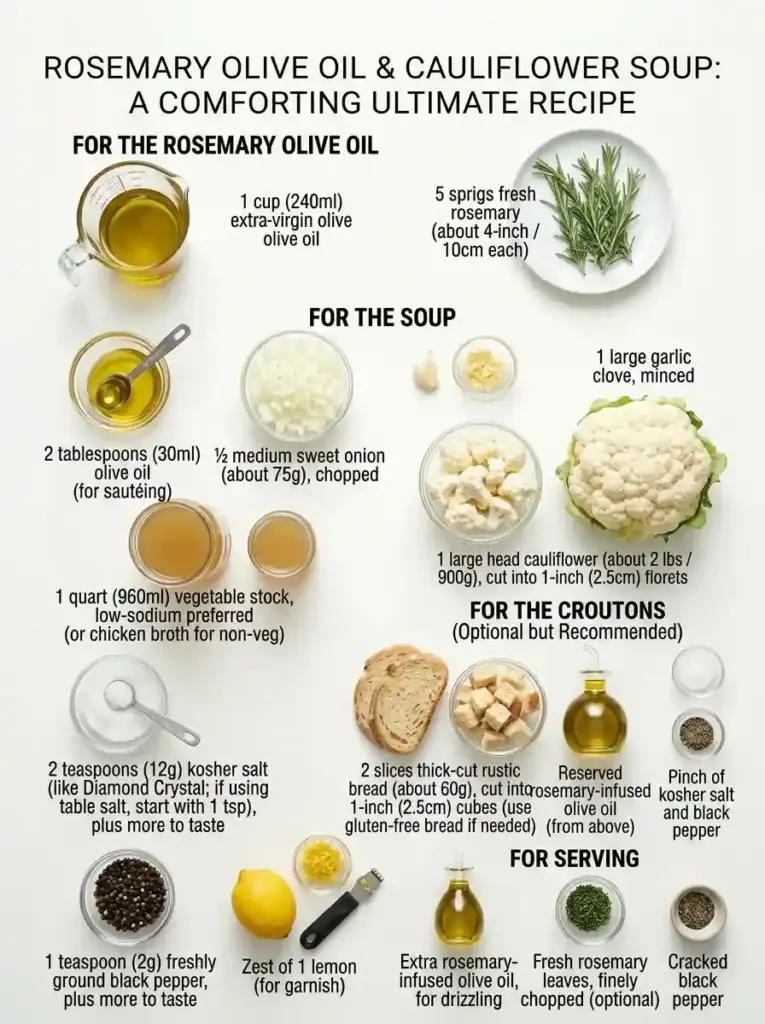
For the Rosemary Olive Oil:
- 1 cup (240ml) extra-virgin olive oil
- 5 sprigs fresh rosemary (about 4-inch / 10cm each)
For the Soup:
- 2 tablespoons (30ml) olive oil (for sautéing)
- ½ medium sweet onion (about 75g), chopped
- 1 large garlic clove, minced
- 1 quart (960ml) vegetable stock, low-sodium preferred (or chicken broth for non-veg)
- 1 large head cauliflower (about 2 lbs / 900g), cut into 1-inch (2.5cm) florets
- 2 teaspoons (12g) kosher salt (like Diamond Crystal; if using table salt, start with 1 tsp), plus more to taste
- 1 teaspoon (2g) freshly ground black pepper, plus more to taste
- Zest of 1 lemon (for garnish)
For the Croutons (Optional but Recommended):
- 2 slices thick-cut rustic bread (about 60g), cut into 1-inch (2.5cm) cubes (use gluten-free bread if needed)
- Reserved rosemary-infused olive oil (from above)
- Pinch of kosher salt and black pepper
For Serving:
- Extra rosemary-infused olive oil, for drizzling
- Fresh rosemary leaves, finely chopped (optional)
- Cracked black pepper
Step-by-Step Instructions (Optimized for Perfect Results)
1. Infuse the Rosemary Oil (The Star Ingredient)
In a small, heavy skillet, combine 1 cup olive oil and 5 rosemary sprigs. Heat over low heat for 5-10 minutes, adjusting heat to maintain a very gentle simmer (tiny bubbles, no frying). Pro-Tip: For a subtler flavor, infuse 5 minutes; for a more intense, “addictive” rosemary note, infuse 10 minutes. Remove from heat and let rosemary cool completely in the oil while you make the soup. Optional Croutons Prep: Carefully pour oil into a heatproof measuring cup, leaving 2 tablespoons in the skillet for croutons.
2. Sauté Aromatics (Build Flavor Base)
In a large, heavy-bottomed pot or Dutch oven (4-6 quart), heat 2 tablespoons olive oil over medium heat. Add chopped onion and cook, stirring occasionally, for 5-6 minutes until tender and translucent. Add minced garlic and cook for 1 minute more until fragrant. Don’t let the garlic brown—it can turn bitter.
3. Simmer Cauliflower Until Tender (Creaminess Development)
Add cauliflower florets, vegetable stock, salt, and pepper to the pot. Bring to a boil over high heat, then immediately reduce heat to medium-low. Cover and simmer gently for 15-20 minutes, until cauliflower is very tender and easily pierced with a fork. Why gentle simmer? This preserves the cauliflower’s natural sweetness and prevents it from becoming waterlogged, ensuring a creamy blend.
4. Blend Until Silky (Safety + Texture)
Remove pot from heat and let soup cool for 10-15 minutes (critical for safe blending). Blending Method 1 (Immersion Blender): Blend directly in the pot until completely smooth. Blending Method 2 (Countertop Blender): Blend in batches, filling the blender no more than halfway. Hold the lid firmly with a kitchen towel to prevent steam explosions. Optional for Ultra-Silky: Strain the blended soup through a fine-mesh sieve for an extra-smooth texture.
5. Finish with Rosemary Oil & Brightness (Layered Flavor)
Strain the rosemary-infused oil, discarding the rosemary sprigs. Layering Technique: Add ¼ cup (60ml) of the rosemary oil to the blended soup and blend briefly to combine. Taste, then add 1-2 tablespoons more oil if desired for extra rosemary flavor. Season with additional salt and pepper if needed. Brightness Boost: Just before serving, sprinkle each bowl with fresh lemon zest (not juice—the zest contains aromatic oils that brighten without adding liquid).
6. Make Croutons (Zero Waste + Texture Contrast)
If making croutons: Heat the reserved 2 tablespoons rosemary oil in the skillet over medium heat. Add bread cubes and a pinch of salt and pepper. Cook, tossing often, for 4-5 minutes until golden and crisp on all sides. Transfer to a plate to cool.
7. Serve Warm (The Cozy Payoff)
Ladle soup into warm bowls. Drizzle with extra rosemary oil, sprinkle with lemon zest and fresh rosemary if using, and top with croutons. Pro Move: Warm your serving bowls in the oven for 5 minutes before ladling in the soup—this keeps it hot longer! Enjoy immediately while velvety and aromatic.
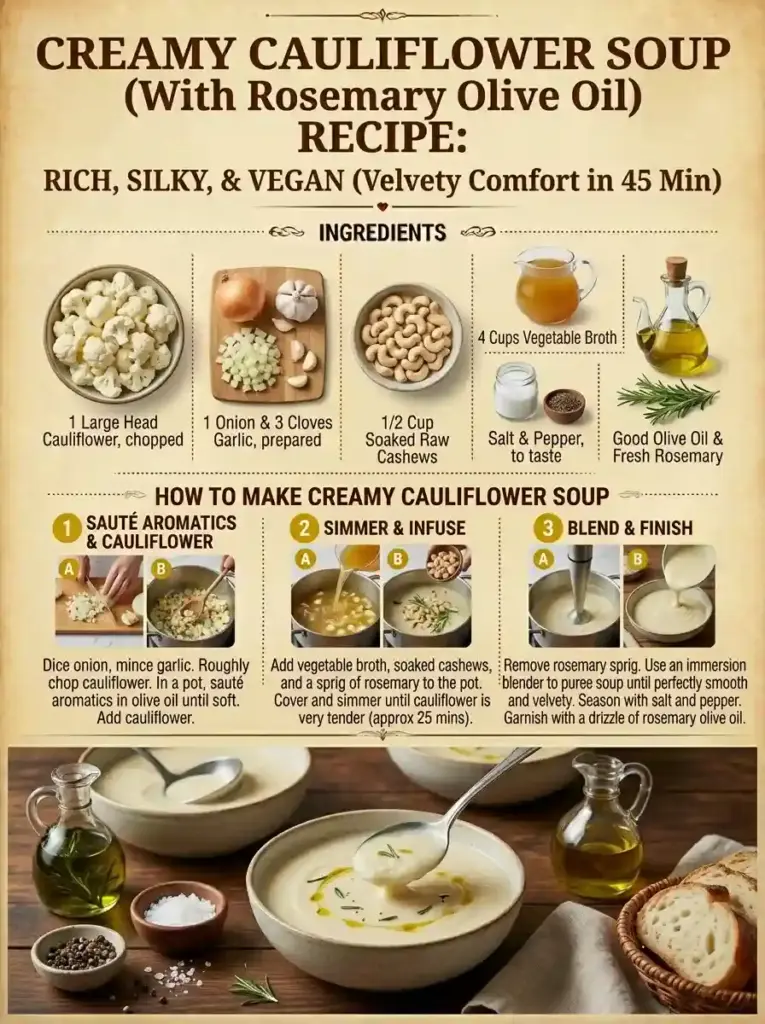
Cauliflower & Ingredient Swaps Guide
| Ingredient | Swap Options | Notes |
|---|---|---|
| Cauliflower | Broccoli florets, parsnips, celery root, or half/half mix | Broccoli: stronger flavor; parsnips/celery root: sweeter, earthier |
| Vegetable Stock | Chicken broth (non-veg), water + bouillon, homemade stock | Water: may need extra seasoning; stock: deeper flavor |
| Fresh Rosemary | Fresh thyme, sage, or oregano | Thyme: milder, more citrusy; sage: earthy, pairs well with cauliflower |
| Olive Oil | Avocado oil, grapeseed oil for infusion | Neutral oils let rosemary shine; olive oil adds fruity depth |
| Bread for Croutons | Gluten-free bread, sourdough, whole grain | Choose based on dietary needs; stale bread toasts better |
Pro-Tips for Next-Level Cauliflower Soup
- Select Firm, Fresh Cauliflower: Choose heads with tight, white florets and fresh green leaves. Avoid yellowing or soft spots.
- Infuse Oil Low & Slow: Keep heat low when infusing rosemary to avoid burning the herbs, which creates bitterness. The oil should be warm and fragrant, not smoking.
- Strain for Restaurant-Quality Silkiness: For an ultra-smooth, elegant texture, strain the blended soup through a fine-mesh sieve before adding rosemary oil.
- Layer Rosemary Oil for Complexity: Adding oil during blending infuses the base; reserving some for finishing adds aromatic top notes. Adjust to your taste preference.
- Make-Ahead Magic: This soup tastes even better the next day as flavors meld. Prepare up to 3 days ahead; reheat gently and add fresh lemon zest just before serving.
- Garnish for Texture & Visual Appeal: A sprinkle of toasted pine nuts, pumpkin seeds, or homemade croutons adds delightful crunch. Lemon zest adds vibrant color and fresh aroma.
Troubleshooting Table
| Problem | Cause & Solution |
|---|---|
| Soup is too thin/watery | Cause: Too much stock or cauliflower not cooked until very tender. Solution: Simmer uncovered to reduce, or blend in ¼ cup cooked white beans or cauliflower for natural thickening. |
| Flavor is bland | Cause: Under-seasoned or not enough rosemary oil infusion. Solution: Season assertively with salt; infuse rosemary oil longer (up to 10 min) for deeper flavor; finish with lemon zest. |
| Soup is grainy or not smooth | Cause: Cauliflower not blended long enough or not cooked until very tender. Solution: Cook cauliflower until fork-tender; blend longer or strain through a fine-mesh sieve. |
| Rosemary oil tastes bitter | Cause: Oil heated too high or rosemary burned. Solution: Infuse over low heat only; remove from heat as soon as fragrant; don’t let rosemary turn black. |
| Soup too thick after chilling | Cause: Natural thickening from cauliflower starches when cold. Solution: Thin with a splash of warm broth or extra rosemary oil before serving. |
| Croutons are soggy or burn | Cause: Heat too high or not tossed often enough. Solution: Cook over medium heat, tossing frequently, until golden and crisp (4-5 min). Remove from pan immediately to prevent carryover cooking. |
Storage & Serving
- Refrigerator: Store soup (without croutons) in an airtight container for up to 4 days. Flavors often improve overnight!
- Freezer: Freeze soup without rosemary oil or croutons in portion-sized containers for up to 3 months. Thaw overnight in refrigerator; reheat gently, then stir in rosemary oil and top with fresh croutons.
- Reheating: Gently reheat on stovetop over low heat, stirring occasionally. Add a splash of broth or extra rosemary oil if soup has thickened too much.
- Make-Ahead: Prepare soup base up to 3 days ahead; store in fridge. Make rosemary oil up to 1 week ahead; store in sealed container at room temperature. Combine and garnish just before serving.
- Serving: Always serve warm, garnished just before eating to maintain texture and aroma. Pair with crusty bread for dipping.
Nutrition Information (Per Serving)
Based on 6 servings (using standard ingredients). This is an estimate and may vary based on specific brands and portion sizes.
- Calories: ~220 kcal (without croutons)
- Total Fat: 20g (Saturated Fat: 3g)
- Carbohydrates: 10g
- Sugars: 4g
- Protein: 4g
- Sodium: 400mg (can be reduced with low-sodium broth)
- Dietary Fiber: 4g
- Cholesterol: 0mg
Disclaimer: This recipe is naturally Vegetarian, Gluten-Free (without croutons or with GF bread), and Dairy-Free. For Keto, net carbs are ~5g per serving.
Perfect Pairings (Elevate Your Soup Night)
- Wine: A crisp, dry white like Sauvignon Blanc or Pinot Grigio cuts through the richness and complements the herbal notes. For red lovers, a light Pinot Noir works beautifully.
- Non-Alcoholic: Sparkling water with a twist of lemon, or a herbal tea like chamomile or mint, enhances the soup’s comforting qualities.
- Beer: A light, crisp lager or a herbal IPA pairs well with the rosemary and cauliflower flavors.
- Side: A simple green salad with lemon vinaigrette balances the soup’s richness. Crusty bread is essential for soaking up every last drop!

Frequently Asked Questions
Can I use frozen cauliflower for this soup?
Yes! Use frozen cauliflower florets (no need to thaw). Add them directly to the simmering broth and cook 5-7 minutes longer than fresh, until very tender. Note: frozen cauliflower may release more water, so you may need to simmer the blended soup uncovered for a few extra minutes to reach desired thickness.
How do I infuse rosemary oil without burning it?
Key tips: 1) Use low heat only—oil should have tiny bubbles, not a full simmer. 2) Infuse 5-10 minutes max; longer = risk of bitterness. 3) Remove from heat immediately when rosemary is fragrant. 4) Let rosemary cool completely in the oil to continue infusing gently. If oil smokes or rosemary turns black, discard and start over.
Why does my soup thicken after chilling?
Cauliflower contains natural starches that gel when cold, causing the soup to thicken. This is normal! Solution: When reheating, add a splash of warm broth, water, or extra rosemary oil 1 tablespoon at a time until desired consistency is reached. Stir well and taste before serving.
Can I make this soup vegan and dairy-free?
Yes! This recipe is naturally vegan and dairy-free as written. Use vegetable stock (verify it’s vegan-certified if needed) and skip any dairy-based garnishes. The creaminess comes from blended cauliflower, not dairy. For extra richness, add 2-3 tablespoons raw cashews when blending.
How do I get a perfectly smooth, silky texture?
Three keys: 1) Cook cauliflower until very tender (fork slides in easily). 2) Blend while still warm (not hot) for smoother emulsification. 3) For restaurant-quality silkiness, strain the blended soup through a fine-mesh sieve before adding rosemary oil. An immersion blender works great; if using a countertop blender, blend in batches and hold lid firmly.
Can I add the rosemary oil during cooking instead of at the end?
You can, but we recommend adding most of it at the end for maximum aromatic impact. Heat diminishes volatile rosemary compounds. Pro technique: Add ¼ cup rosemary oil during blending for infused base flavor, then reserve the rest for finishing. This layering creates both depth and a bright, fresh top note.
Why use lemon zest instead of lemon juice?
Lemon zest contains aromatic oils that provide bright, floral citrus notes without adding liquid that could thin the soup. Juice adds acidity but can mute the delicate rosemary aroma. For best results: use zest for garnish; if you prefer extra tang, add ½-1 teaspoon fresh lemon juice to taste after blending.
How do I store and reheat leftovers?
Store soup (without croutons) in an airtight container in the fridge for up to 4 days. Reheat gently on stovetop over low heat, stirring occasionally. Add a splash of broth or rosemary oil if soup has thickened. For freezing: freeze without rosemary oil or croutons for up to 3 months; thaw overnight, reheat, then add fresh oil and croutons before serving.
Can I make this soup ahead for a dinner party?
Absolutely! Make the soup base up to 3 days ahead; store in fridge. Make rosemary oil up to 1 week ahead; store in sealed container at room temperature. Reheat soup gently, stir in rosemary oil to taste, and garnish with fresh lemon zest and croutons just before serving. This actually improves flavor as ingredients meld!
What can I substitute for rosemary?
Great herb swaps: fresh thyme (milder, citrusy), sage (earthy, pairs well with cauliflower), or oregano (bold, Mediterranean). Use same quantity (5 sprigs) and infuse using same low-heat method. For a different profile, try infusing with a bay leaf + thyme combo. Always taste oil before adding to soup—herb intensity varies.
Chilled Zucchini Soup With Lemon and Basil

Creamy Cauliflower Soup With Rosemary Olive Oil
Ingredients
Soup Base
- 1 larg head of cauliflower, cut into florets
- 2 tbsp olive oil
- 1 medium onion, diced
- 3 cloves garlic, minced
- 4 cups vegetable broth (or chicken broth for a richer flavor)
- ½ cup heavy cream (or coconut milk for a dairy-free option)
- Salt and pepper to taste
Rosemary Olive Oil
- 3 tbsp tablespoons extra virgin olive oil
- 1 sprig fresh rosemary
Instructions
- Step 1: Roast the CauliflowerPreheat your oven to 400°F (200°C).Toss cauliflower florets with 1 tablespoon of olive oil, salt, and pepper. Spread on a baking sheet in a single layer.for 20 minutes, or until golden and tender.
- Step 2: Sauté AromaticsIn a large pot, heat 1 tablespoon of olive oil over medium heat.Add diced onion and sauté until translucent, about 5 minutes.Stir in minced garlic and cook for an additional 1 minute, until fragrant.
- Step 3: Simmer the SoupAdd roasted cauliflower and vegetable broth to the pot.Bring to a boil, then reduce the heat and let it simmer for 10 minutes.
- Step 4: Blend and CreamUsing an immersion blender, puree the soup until smooth. Alternatively, blend in batches using a countertop blender.Stir in the heavy cream and adjust seasoning with salt and pepper.
- Step 5: Infuse the Rosemary OilIn a small saucepan, heat the olive oil over low heat.Add the rosemary sprig and let it steep for 5 minutes. Remove from heat and discard the rosemary.
- Step 6: ServeLadle the soup into bowls.Drizzle each serving with rosemary olive oil for an elegant finish.
Notes
- For an extra creamy texture, strain the soup through a fine mesh sieve after blending.
- Garnish with crispy croutons, chopped parsley, or toasted almonds for added texture.
Table of Contents
🥗 Free Custom Keto Meal Plan?
Do you want to lose weight while still enjoying delicious Asian & Thai Fusion meals? Take this quick quiz to get your personalized Keto plan based on your favorite foods!
- ✅ No more guessing what to eat
- ✅ Delicious & easy-to-make recipes
- ✅ Tailored to your body type
Get My Custom Plan Now! →
*Over 100,000+ people have transformed their lives with this quiz.