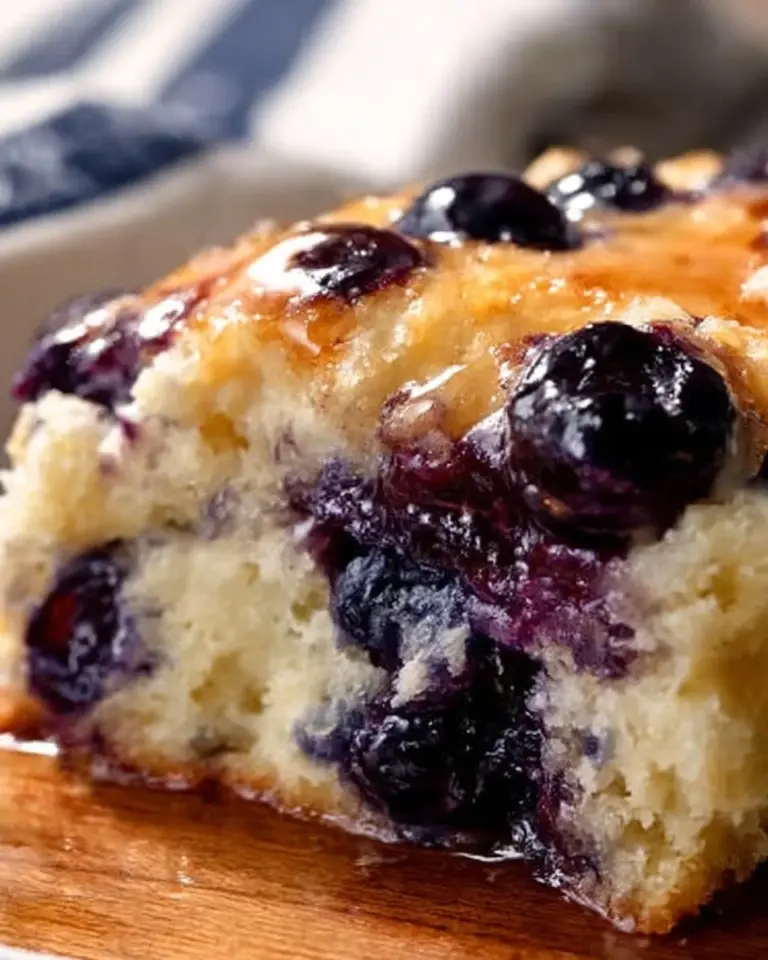

Table of Contents
Table of Contents
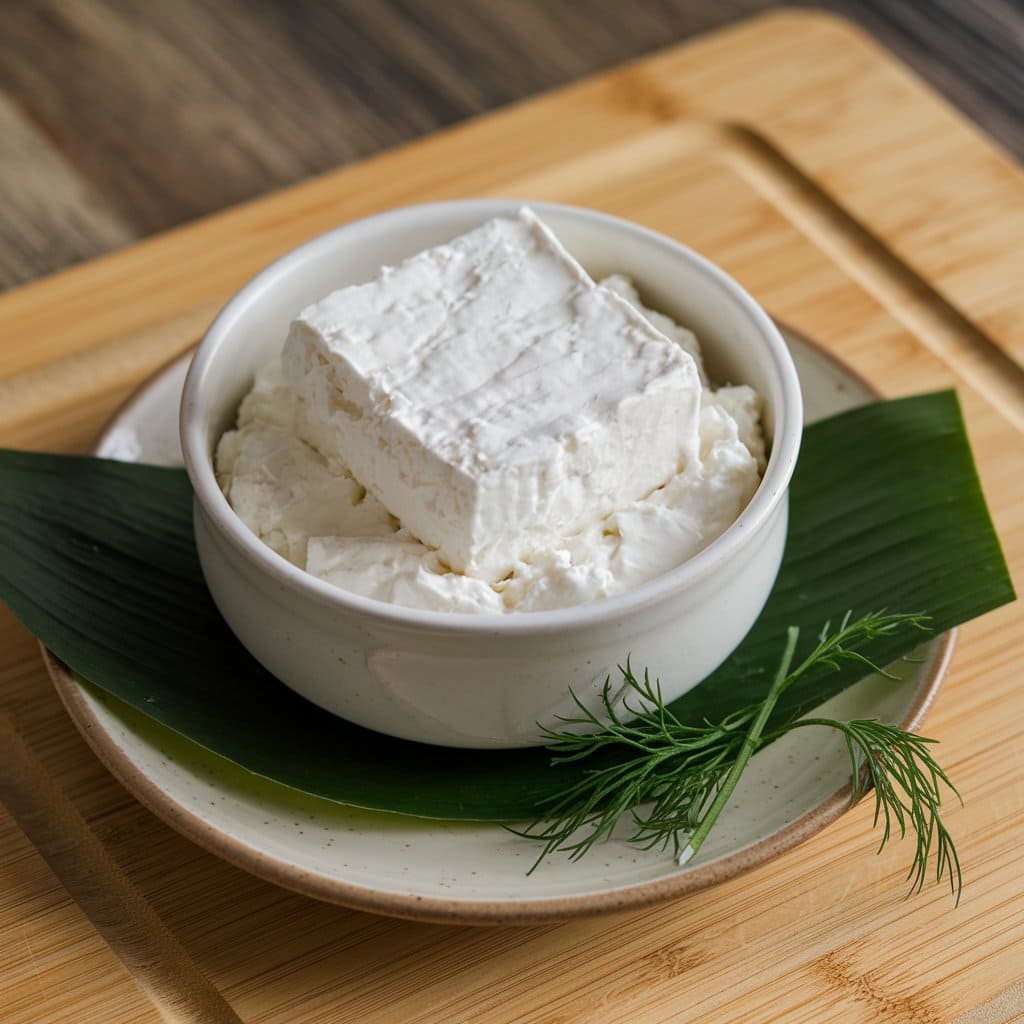
Making homemade cottage cheese is simpler than most people think. With just milk, an acid, and basic kitchen tools, you can create a fresh, protein-rich dairy staple that tastes noticeably better than store-bought versions. Whether you’re a complete beginner or an experienced home cook, this guide walks you through every step, plus pro tips to customize texture, flavor, and dietary needs.
Why Make Cottage Cheese at Home?
- Total control: Choose your milk fat, salt level, and add-ins. No hidden stabilizers, gums, or preservatives.
- High protein, low carb: Naturally rich in casein protein, calcium, and B vitamins.
- Budget-friendly & zero waste: Use milk before it expires, buy in bulk, and repurpose leftover whey.
- Family-friendly: Safe, simple, and educational. Great for weekend cooking with kids.
- Customizable texture: Adjust draining time for soft, creamy, or crumbly curds.
Ingredients & Equipment (Scalable)
Ingredients
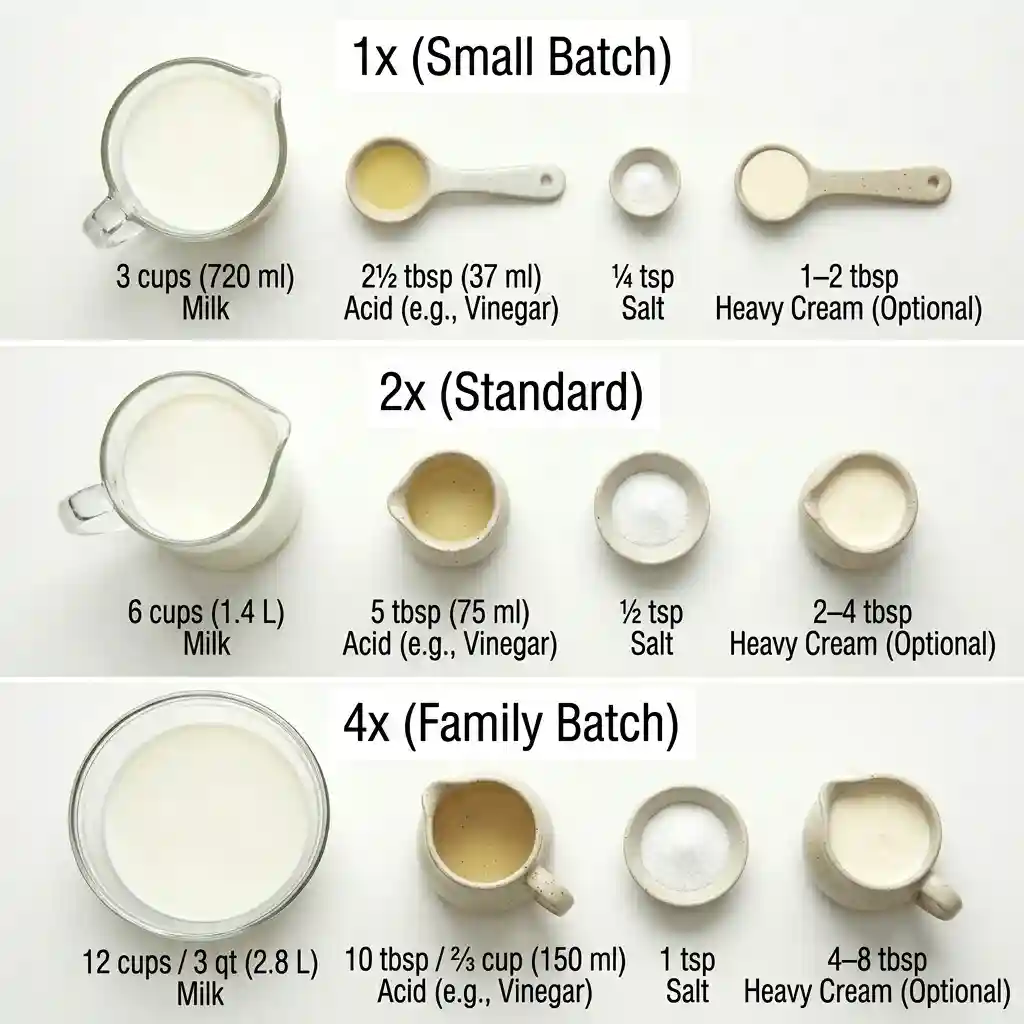
| Serving Size | Milk | Acid (Vinegar or Lemon Juice) | Salt | Heavy Cream (Optional) |
|---|---|---|---|---|
| 1x (Small Batch) | 3 cups (720 ml) | 2½ tbsp (37 ml) | ¼ tsp | 1–2 tbsp |
| 2x (Standard) | 6 cups (1.4 L) | 5 tbsp (75 ml) | ½ tsp | 2–4 tbsp |
| 4x (Family Batch) | 12 cups / 3 qt (2.8 L) | 10 tbsp / ⅔ cup (150 ml) | 1 tsp | 4–8 tbsp |
💡 Milk Note: Whole milk yields the creamiest curds. 2% or skim works but produces drier, smaller curds. Avoid ultra-pasteurized milk for best coagulation.
Equipment
- Large stainless-steel or enamel pot (non-reactive)
- Kitchen thermometer (candy/digital)
- Wooden spoon or heatproof spatula
- Fine-mesh strainer or colander
- Cheesecloth or clean cotton kitchen towel
- Large bowl (for whey collection)
- Airtight storage container
Step-by-Step Instructions
Time Breakdown
- Active: 10 minutes
- Passive (heating + resting + draining): 40–50 minutes
- Total: ~50–60 minutes
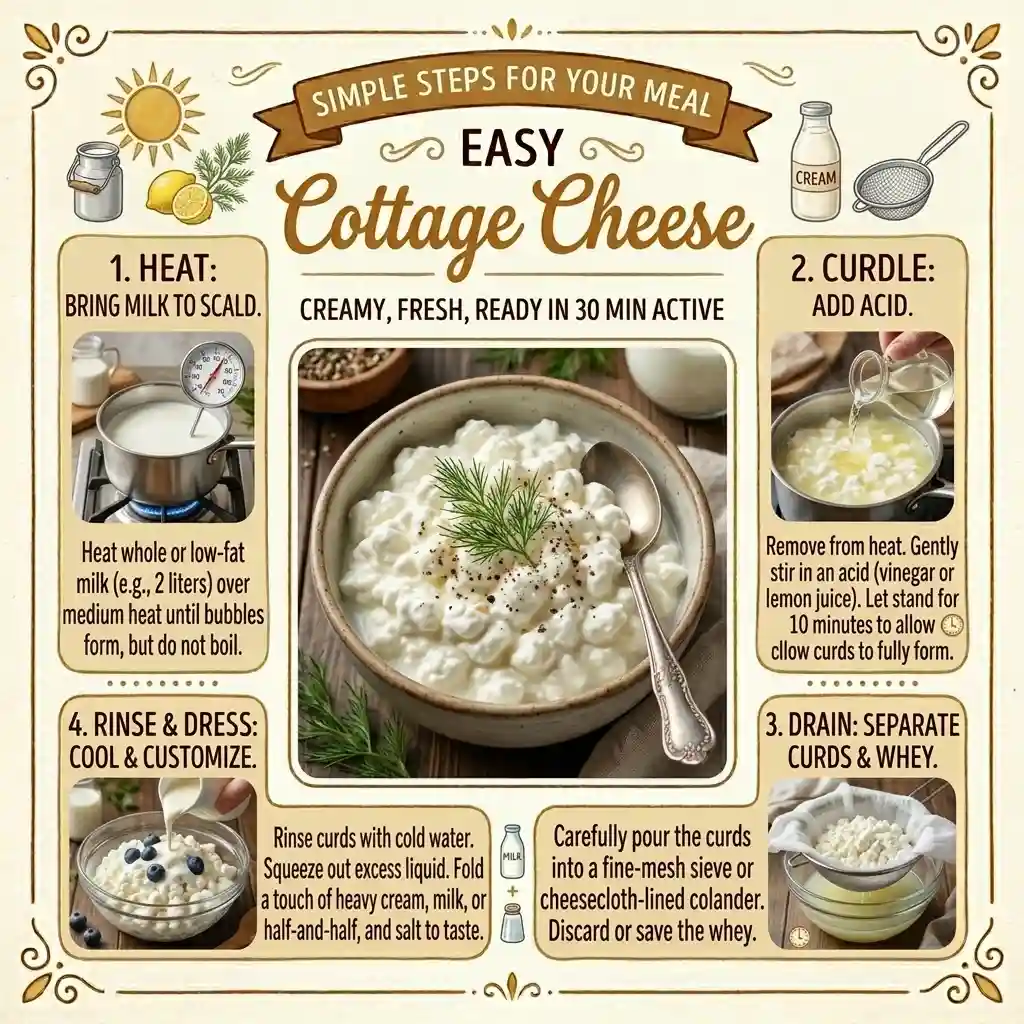
1. Heat the Milk
Pour milk into your pot and warm over medium heat. Stir occasionally to prevent scorching.
🌡️ Target temperature: 190°F (88°C). You’ll see small bubbles at the edges and gentle steam. Do not boil.
2. Add the Acid & Curdle
Remove from heat. Slowly pour in vinegar or lemon juice while stirring gently.
Within 30–60 seconds, you’ll see white curds separate from yellowish whey.
️ Cover and let it rest 30 minutes undisturbed. This allows curds to firm up and improves yield.
3. Drain the Curds
Line a strainer with cheesecloth and place it over a bowl. Ladle curds and whey into the strainer.
Let gravity drain the whey. Adjust time for your preferred texture:
| Draining Time | Texture | Best For |
|---|---|---|
| 5–7 min | Soft, moist, creamy | Spreads, dips, breakfast bowls |
| 10–12 min | Classic cottage cheese | Salads, snacks, toast |
| 15–20 min | Dry, crumbly, feta-like | Crumbling, baking, savory dishes |
4. Rinse & Season (Optional)
For a milder taste, rinse curds briefly under cool water. Pat dry gently.
Stir in salt, cream, or your favorite add-ins. Taste and adjust.
5. Chill & Serve
Transfer to an airtight container. Refrigerate at least 1 hour before serving for best texture.
Use within 5–7 days.
⚠️ Pro Tip: Stirring too vigorously after adding acid breaks curds into tiny grains. Fold gently instead.
Flavor Variations & Adaptations
| Variation | How to Adapt | Best For |
|---|---|---|
| Herb & Garlic | Mix in 1 tbsp chopped chives/dill + ¼ tsp garlic powder | Savory snacks, toast topping |
| Sweet & Fruity | Stir in 1 tsp honey/maple syrup + fresh berries | Breakfast bowls, desserts |
| Spicy Kick | Add 1 tbsp finely diced jalapeño or ½ tsp hot sauce | Appetizers, tacos, wraps |
| Smoked Paprika | Fold in ½ tsp smoked paprika + pinch of black pepper | Dips, grain bowls |
| High-Protein | Blend in 2 tbsp unflavored whey protein isolate after draining | Post-workout meals |
Troubleshooting: Common Mistakes & Fixes
| Problem | Likely Cause | Quick Fix |
|---|---|---|
| No curds forming | Milk didn’t reach 190°F (88°C) or acid was old | Reheat to target temp, add 1 extra tbsp fresh acid |
| Rubbery/tough curds | Overheated or boiled milk | Next time, remove from heat at first steam; stir gently |
| Grainy/tiny curds | Over-stirring after adding acid | Fold curds gently; let rest undisturbed |
| Bland flavor | Skipped salt or rinsed too long | Add salt gradually; taste as you go |
| Too watery | Under-drained or added too much cream | Drain 5+ extra minutes; skip cream next batch |
Frequently Asked Questions (FAQ)
Can I use ultra-pasteurized milk?
You can, but curd formation may be weaker and yield lower. Ultra-pasteurization alters milk proteins. For best results, use regular pasteurized or fresh local milk.
Why is my cottage cheese rubbery or grainy?
Usually caused by overheating (near boiling) or over-stirring after adding acid. Keep heat at medium, aim for 190°F (88°C), and fold gently once curds appear.
Can I skip the salt?
Yes. Salt enhances flavor and draws out moisture, but unsalted cottage cheese works well for baking or sweet applications. Add salt to taste after draining.
What can I do with the leftover whey?
Whey is nutrient-rich! Use it in bread dough, smoothies, soups, or as a plant fertilizer. Store in the fridge for up to 1 week or freeze for later.
How do I make it creamier without adding fat?
Drain for less time (5–7 minutes), rinse gently, and fold curds carefully. You can also blend half the batch with a splash of milk and mix back in.
Is homemade cottage cheese safe for children?
Yes. It’s a great source of protein and calcium. Keep salt low for toddlers, and ensure milk is pasteurized. Consult a pediatrician for specific dietary concerns.
Can I freeze cottage cheese?
Freezing changes texture (becomes grainy), but it’s fine for cooking or baking. Store in airtight containers, thaw in the fridge, and blend smooth before use.
What’s the difference between cottage cheese and ricotta?
Cottage cheese is made from milk curds drained and optionally rinsed. Ricotta is traditionally made by reheating leftover whey to extract fine proteins. Cottage cheese is chunkier and tangier; ricotta is smoother and milder.
Nutrition Information (Per ½ Cup Serving)
| Nutrient | Approx. Value |
|---|---|
| Calories | 100–120 kcal |
| Protein | 12–14 g |
| Fat | 4–5 g (varies by milk type) |
| Carbohydrates | 3–4 g |
| Calcium | 15% DV |
| Sodium | 150–250 mg (adjustable) |
| Vitamin B12 | 10% DV |
| Phosphorus | 12% DV |
Values are estimates based on whole milk + ½ tsp salt. Actual nutrition depends on milk fat content, draining time, and added ingredients.
📦 Storage & Zero-Waste Tips
- Refrigerator: Store in an airtight container for 5–7 days. For longer freshness, store upside-down to create a mild vacuum seal.
- Freezing: Not ideal for texture, but works for cooking/baking. Portion into small containers, freeze up to 1 month, thaw in fridge, and blend before use.
- Whey Reuse:
- Replace water in bread/pizza dough
- 🥤 Add to smoothies or oatmeal for protein
- 🍲 Use as broth base for soups/stews
- 🌱 Dilute 1:4 with water for plant fertilizer
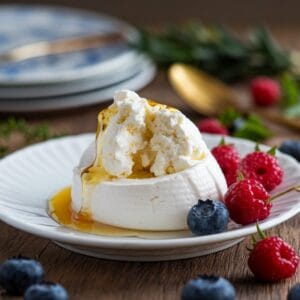
Cottage Cheese Homemade
Ingredients
- 3 cups (720 ml) Milk
- 2½ tbsp (37 ml) Acid (Vinegar or Lemon Juice)
- ¼ tsp Salt
- 1-2 tbsp heavy cream or half-and-half (optional, for creaminess)
Instructions
- Pour the milk into a large pot and heat over medium heat until it reaches 120°F (49°C). Stir occasionally to prevent scorching.Remove the pot from heat and gently stir in the vinegar or lemon juice. Let it sit for 10-15 minutes until the milk curdles and separates into curds and whey.Line a colander with cheesecloth and place it over a large bowl. Pour the curdled milk into the colander to separate the curds from the whey.Rinse the curds under cold water to remove any residual vinegar or lemon juice.Gather the cheesecloth and gently squeeze out excess liquid. Transfer the curds to a bowl.Add salt and heavy cream (if using) to the curds and mix gently. Adjust seasoning to taste.Store in an airtight container in the refrigerator for up to 5 days.
Notes
- Use fresh, high-quality milk for the best results.
- Adjust the creaminess by adding more or less heavy cream.
- Save the whey for use in smoothies, soups, or baking.
Quick and Simple Microwave Chocolate Mug Cake
🥗 Free Custom Keto Meal Plan?
Do you want to lose weight while still enjoying delicious Asian & Thai Fusion meals? Take this quick quiz to get your personalized Keto plan based on your favorite foods!
- ✅ No more guessing what to eat
- ✅ Delicious & easy-to-make recipes
- ✅ Tailored to your body type
Get My Custom Plan Now! →
*Over 100,000+ people have transformed their lives with this quiz.